
Advanced Search
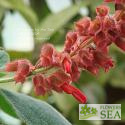
(Giant Colombian Red Mountain Sage) In 1898, physician and medical plant researcher Henry Hurd Rusby (1855-1940) found this towering sage with large, deep red flowers in the Sierra Nevada de Santa Marta mountains of Colombia.
Results for gate from the blog
| Salvia Small Talk |
| 1. Salvia Small Talk: The Gardens and Sages of Alcatraz |
| Alcatraz Island in San Francisco Bay once housed prisoners, many of whom helped beautify "The Rock" by working in prison gardens. Nowadays, volunteer gardeners keep the island flowering with the help of long-blooming, drought-tolerant Salvias |
| New at FBTS |
| 2. New at FBTS: Hummingbirds Thrive on Margie Griffith Sage |
| A love of birds can grow into a passion for gardening. The reverse is also true. Sometimes these passions result in the development of excellent plants, such as Salvia x 'Margie Griffith' -- a 2017 introduction at Flowers by the Sea Online Nursery. Margie Griffith Sage grows up to 96 inches tall and wide in bloom. In some parts of its USDA Plant Hardiness Zones 8 to 11 it feeds hummingbirds nearly year round. |
| 3. 15 Select Salvias for Dry, Partial-Shade Gardening |
| Learning how to garden in dry shade requires mediation of the needs of all the plants involved. Dry shade is particularly abundant under trees, because they consume lots of water. Fortunately, numerous drought-resistant Salvias can handle life in dry, partial shade. Flowers by the Sea details basic considerations of dry shade gardening and identifies 15 sages for it. |
| Hummingbirds in the Garden |
| 4. 6 Indispensable Hummingbird Flowers for Long, Easy Bloom |
| Hummingbirds are like tiny combat jets dive bombing each other when staking claim to the nectar-rich flowers they need for survival. Fights over nectar habitat can reduce hummingbird gardens to single occupancy. FBTS Farm and Online Nursery details and tells stories about its top six hummingbird flowers. Plant lots of them to accommodate a village of hungry hummers. |
| 5. A Community of Anise Scented Sages We Adore |
| You might expect the foliage of a plant called Anise-Scented Sage (Salvia guaranitica) to smell robustly like licorice, which shares the same fragrance as anise. Some gardeners detect a hint of licorice after crushing a leaf, but many say the foliage merely smells sweet. These popular sages are native to Brazil where indigenous peoples used their leaves as a medicine. Flowers by the Sea grows many varieties in a wide range of sizes and flower colors |
| Cultivating Color |
| 6. Add Pale Dreamy Sages to Your List of Moon Garden Plants |
| Moon gardens contain plants with pale flowers -- especially whites -- and silvery or variegated foliage that shine in moonlight. Some gardeners plant them to glow from afar when peering into the dark through a window. Others design these gardens for nighttime rambles. A number of white-flowered sages would be excellent additions to the dreamy design of a moon garden. |
| Ask Mr. Sage |
| 7. Ask Mr. Sage: How FBTS Chooses New Salvias |
| Some Salvia collectors want to obtain a broad range of sages including all the new introductions on the market. But Flowers by the Sea can't and doesn't want to grow all the new cultivars available, partly because there is a growing abundance of Salvia introductions. Instead, FBTS focuses on selecting the most superior new plants even when introducing its own hybrids in its series of Rainbow Jame Sages. Ask Mr. Sage is a regular feature based on calls and emails received by FBTS. |
| 8. Ask Mr. Sage: What Sages Grow in Clay Soils? |
| Ask Mr. Sage answers questions based on calls and emails that Flowers by the Sea receives, such as concerns about what Salvias will grow in clay soils. This article talks about specific plants for dry and wet clay conditions, how to improve soil drainage and planting on slopes in wet areas. |
| Hummingbirds in the Garden |
| 9. Bat-Faced Beauty: Gardeners & Hummingbirds Love Cuphea schumannii |
| Most bat faces only look beautiful to their mothers. However bat-faced Cuphea schumannii seems pretty as punch to hummingbirds in search of a sweet drink of nectar. If you take a close look at the ragged, open end of each flower, you'll see two, tiny, lavender petals standing straight up like bat or mouse ears. So, despite its common name, Orange Cigar Plant, this species is known as a bat-faced Cuphea. Aside from being excellent for attracting pollinators, Cupheas are becoming important agricultural crops that reduce pesticide use. |
| 10. Battles in the Salvia Garden: Controlling Spider Mites - Part II |
| Pollinators lose important food sources when Salvias and other nectar-rich flowers are destroyed by spider mites. This is Part 2 of a two-part series about understanding and overcoming these dangerous pests. Along with the non-chemical interventions described in Part 1 of this series, gardeners sometimes need the help of predatory insects and mites, insecticidal soaps and horticultural oils. Pesticides called miticides may also eventually be necessary, but should be the last resort. |
| Cultivating Color |
| 11. Bedding Plant Royalty: Splendid Salvia Splendens |
| If the world were to coronate a Salvia as its favorite annual, there's little doubt that a deep red variety of Scarlet Sage ( Salvia splendens ) would bear the sceptre. It's a long blooming, global favorite sometimes called Bedding Sage or Red Sage. When it was first introduced to horticulture in 1822, it was known as Lee's Scarlet Sage. Flowers by the Sea Online Nursery explains the growth habits and history of Scarlet Sage and suggests numerous favorite cultivars to add grandeur to your garden. |
| Celebrity Salvias |
| 12. Celebrity Salvias: Fuzzy, Fancy Salvia Oxyphora |
| A bright, cherry-licorice red, the large, fuzzy blossoms of Salvia oxyphora would make anyone stop and pay attention. Commonly known as Fuzzy Bolivian Sage or Bolivian Spearhead Sage, S. oxyphora has equally unusual foliage that fools the eye. At a distance, the plant’s lance-shaped leaves appear to be a smooth, glassy green. However, they are covered with tiny clear-to-white hairs. They’re also large -- growing up to 5 inches long and 2 inches wide at maturity -- and taper to long, sharp points. It was first collected near Cochabamba, Bolivia, by German botanist Otto Kunst in 1892 |
Common terms in this search: giant colombian red mountain sage physician medical plant researcher henry hurd rusby found towering large deep flowers sierra nevada santa marta mountains colombia libanensis endemic mystery why its scientific name refers lebanon san francisco's strybing arboretum recently introduced rare high-altitude horticultural community frank almeda curator senior botanist california academy sciences collected seed blooms profusely main gate entry garden francisco botanical