
Advanced Search
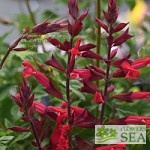
(Roman Red Sage) This handsome, long blooming hybrid sage features a dramatic combination of scarlet flowers and deep rust-to-merlot calyxes. Deadheading spent blossoms prolongs bloom time.
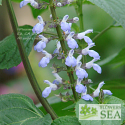
(Silly Mexican Sage) Also known as Salvia roscida, this close relative of Blue Sky Mexican Sage (Salvia caudata 'El Cielo Blue') has thousands of deep violet-blue flowers with prominent white bee lines.
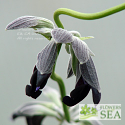
(Purple Bract Peruvian Sage or Concolor Sage) Similar to its wild relative, Peruvian Sage, which is also known as Concolor Sage, this cultivar has foliage that is smooth, apple green on top and fuzzy with silver hairs on the bottom. Major differences appear in the dramatic bracts.
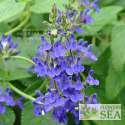
(Scordy Sage) Little is known about this shrubby Ecuadorian native. We're not even sure it is from Ecuador! However, this is another sage that sells itself instantly when seen in bloom. The large clusters of rich, deep violet flowers bloom summer to fall, attracting honeybees and hummingbirds.
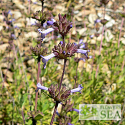
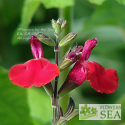
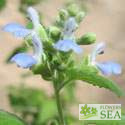
(Mejorana) In Spanish, Mejorana means ‘marjoram.” Similar to oregano-type Marjoram – another Mint family member -- this sage is used to flavor meat dishes. Our cultivar, which is native to Texas and Mexico, has lovely bluish-purple flowers that bloom summer to fall amid fragrant, fine, furry green foliage.
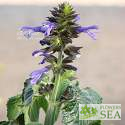
(Lolly's Mexican Sage) Our variety of Salvia mexicana 'Lolly' is the tall kind growing up to about shoulder height. A shorter form is often called "Lollie Jackson" or "Lolly Jackson." Who or what the mysterious Lolly is remains unclear.
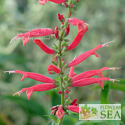
(Frieda Dixon Pineapple Sage) Most varieties of Salvia elegans have bright red flowers. But Frieda Dixon Pineapple Sage, which blooms abundantly beginning in late fall, has softer salmon-pink blossoms set against mid-green, lance-shaped leaves.
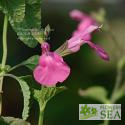
(Rosie O'Grady Mountain Sage) Honeybees and hummingbirds love the large, bright pink flowers of Salvia microphylla 'Rosie O'Grady', a drought-resistant sage. Dense and fragrant, it's large, glossy green leaves are veined and have finely serrated edges. This is a lush choice for dry gardens.
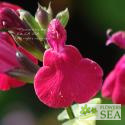
(Killer Cranberry Mountain Sage) Masses of magenta flowers on tall spikes lure honeybees and hummingbirds to the rich nectar of Salvia microphylla 'Killer Cranberry'. Its prolific flowers are a killer attraction for people too.
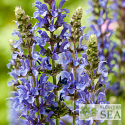
(Blau Hügel Meadow Sage) When in bloom, petite Salvia nemorosa 'Blue Hill' more than doubles in height. Its tall, spike-like racemes of violet-blue flowers are so dense and compact that this woodland sage is sometimes called "Blue Mound."
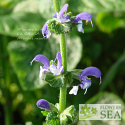
(Bi-Color Meadow Sage or Meadow Clary Sage) Exceptionally cold tolerant, Salvia pratensis 'Proud Mary' is our own seed-grown strain of a plant identical to the patented S. pratensis 'Madeline'.
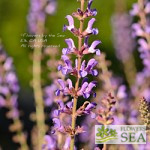
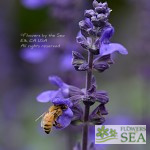
(Big Blue Sage) This new seed-grown strain can best be described as a much improved Indigo Spires Sage. It has deep blue-green, corrugated leaves and lots of deep blue flower spikes that bloom from summer till the end of the growing season.
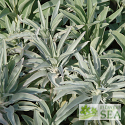
(Compact Sacred White Sage) Salvia apiana var. compacta is significantly shorter than the common species of Sacred White Sage and somewhat more cold tolerant. Its smaller leaves and compact form make it a tidier choice for home gardens with the right kind of growing conditions.
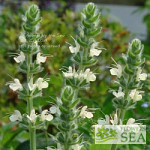
(Austrian Sage) Tall spikes of large, pale yellow flowers rise up from Salvia austriaca’s basal rosette of impressively large leaves. Deeply lobed, like the edges of a lacy collar, the leaves are broader and longer than those of any Salvia we have ever grown.
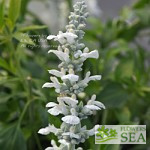
(White Flame Sage) Like bright white candle flames, the short vigorously upright flower spikes of petite Salvia x ‘White Flame’ light up flowerbeds.
The following terms were added to your search to help improve the result. Click here to exclude these extra terms from the search.
- relatives
Results for relative from the blog
| Getting Started with Salvias |
| 1. Getting Started: Salvias for Zone 9 |
| California's small, Mohave Desert city of Barstow averages about 5 inches of rain annually. Across the continent, Pensacola, Florida, has more than double Barstow's population and more than 12 times its amount of rainfall. Yet both cities are part of the U.S. Department of Agriculture's Plant Hardiness Zone 9 where you can plant perennials and shrubs that survive winter lows ranging from 20 to 30 degrees F. Flowers by the Sea takes readers on a triple coast road trip of Zone 9 and suggests plantings for varied growing conditions along the way. |
| 2. 15 Select Salvias for Dry, Partial-Shade Gardening |
| Learning how to garden in dry shade requires mediation of the needs of all the plants involved. Dry shade is particularly abundant under trees, because they consume lots of water. Fortunately, numerous drought-resistant Salvias can handle life in dry, partial shade. Flowers by the Sea details basic considerations of dry shade gardening and identifies 15 sages for it. |
| Ask Mr. Sage |
| 3. Ask Mr. Sage: What Kinds of Salvias Are Edible? |
| Ask Mr. Sage answers questions based on calls and emails that Flowers by the Sea receives. This post concerns Salvias that are edible and tasty. Although we are unaware of any Salvia species (true sages) that contain poisonous parts, we are cautious about which ones to recommend for culinary use. A link to our culinary species is included along with links to our blog posts about cooking with sages. |
| Cultivating Color |
| 4. Composing a Symphony of Pastel Salvias Including Elk Rainbow Sages |
| If you want to orchestrate a peaceful symphony in a flowerbed, planting a profusion of pastels is one way to do it. Pastels are lighter hues of bright primary and secondary colors. Although gardeners often visualize bright colors when thinking of Salvias, there are a number of pastels in the genus such as among the Jame Sage Hybrids (Salvia x jamensis spp.), including many in the new Flowers by the Sea Elk Rainbow Series. |
| Getting Started with Salvias |
| 5. Getting Started: Salvias for the Coastal Southeast |
| True sages are members of the Salvia genus and number in the hundreds. They are native to a wide variety of environments worldwide, which is why some are ideal for the dry gardens of California and others can handle the abundant moisture of the American Southeast. Flowers by the Sea raises many sages that grow well in the Southeast, including some that are either native to the region or have jumped fences from gardens into the wild. |
| 6. Getting Started: Salvias for the Midwest |
| Severe winter chill and summer heat coupled with extreme humidity are challenges that gardeners face in the Midwest. Many Salvias are excellent choices as long-blooming annuals in the region while others -- ones that can withstand cold winters -- are reliable perennials. Flowers by the Sea Online Plant Nursery explains the confusing Midwest boundaries from Ohio west to Kansas and North Dakota south to Missouri. It talks about the range of USDA Plant Hardiness Zones in the region and the kinds of sages that grow best there. |
| 7. Getting Started: Salvias for the Southwest |
| Ask anyone to describe the American Southwest, and they're likely to sum it up in three letters : "D-R-Y." Yet precipitation can vary a lot here state by state and even within different parts of the individual states. One thing that is consistent about the story of water throughout the Southwest, is that rain and snow can rapidly swing from famine to feast to misfortune. |
| Sacred Sages |
| 8. A Guide to Growing and Respecting Sacred White Sage |
| White Sage (Salvia apiana) is a sacred plant for Native Americans, especially tribes in its Southern California native lands. It's a challenging plant to grow. Flowers by the Sea Farm and Nursery talks about the history and religious use of Salvia apiana as well as providing a guide to growing it. |
| 9. In the Native Garden: Colorful California Salvias Plus a Cousin |
| Native plants, including California's many indigenous sages, are like the boys or girls next door who were overlooked until outsiders discovered their good looks and other fine attributes. Flowers by the Sea grows hardy, drought-resistant California Salvias that are native to a broad swath of the West Coast ranging from Northern Baja to Southern Oregon. Many tolerate heat. They are well suited to waterwise landscapes, including dry gardens. |
| 10. July in the Salvia Garden |
| July is a time of lush plant growth and pollinator activity in Salvia gardens. Aside from weeding and taking breaks to watch bees, hummingbirds and other small wildlife, there are many tasks to attend to in the sage garden during July. Flowers by the Sea Farm and Online Nursery offers a list of midsummer tasks to keep your garden buzzing and blooming. |
| New at FBTS |
| 11. New at FBTS: Salvia x 'Ultra Violet' Defies Heat and Cold |
| In the Rocky Mountain West, conditions can swing from hellishly hot, dry summers to freezing cold winters. Many Southwestern Salvias are ideal for the sunbaked summers but have trouble surviving chilly Zone 5 winters. So we appreciate the cold hardiness as well as the drought resistance of one of our newest hybrid cultivars, Ultra Violet Hybrid Sage ( Salvia lycioides x greggii ‘Ultra Violet’). |
| Cultivating Color |
| 12. Pantone Pageant: Emerald Designer Salvias |
| Emerald and other cool shades of green are among the hot colors for 2013, according to Pantone, a design-industry leader. Flowers by the Sea doesn't generally think of greens or of any colors in nature as being in or out. However, we think it is fun and fresh to consider garden design from a different perspective. Emerald is Pantone's top color for the year. This article about emerald-colored Salvias begins a pageant of sorts down the runway of our blog, showing how the Pantone color matching system can be used to shape landscaping decisions. |
Common terms in this search: roman red sage handsome long blooming hybrid features dramatic combination scarlet flowers deep rust-to-merlot calyxes deadheading spent blossoms prolongs bloom time compact heavily branched darcyi splendens smaller has more rounded tidy form than most its relatives our catalog good fit tucking into container plantings along pathways front flowerbed borders whether full sun partial shade when considering new difficult not get