
Advanced Search
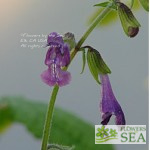
(Yunnan Sage or yun nan shu wei cao) Yunnan Sage's tall spikes of violet-to-purple flowers bloom from summer into fall. Native to Southwestern China's provinces of Yunnan, Guizhou and Sichuan, it grows on shady, grassy hillsides and along forest margins at elevations up to 9,500 feet.
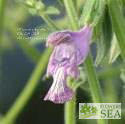
(san ye shu wei cao) So what do all those Pinyin words mean in this sage’s common name? We’ll give you an answer to the best of our ability in a minute. Meanwhile, we need to note that this medicinal Asian sage has handsome foliage and deep violet flowers.
Results for system from the blog
| Cultivating Color |
| 1. Cultivating Color: New FBTS Tools Aid Garden Design |
| Have we got tools for you! No, we aren't selling Ginzu clippers, rust-free shovels, a miraculous compost-in-minutes machine or anything requiring payments. We're talking about a set of color tools for accurately visualizing and comparing the floral and foliage colors of Salvias. As you wander through the riot of hues in our online catalog at Flowers by the Sea, these tools aid plant selection and landscape planning. Beginning in fall 2014, we began identifying the colors of all FBTS plants based on the internationally standardized color system published by the U.K.'s Royal Horticultural Society. This improves descriptions of plant colors and makes color comparisons of plants easier for garden design. |
| 2. Pantone Pageant: Emerald Designer Salvias |
| Emerald and other cool shades of green are among the hot colors for 2013, according to Pantone, a design-industry leader. Flowers by the Sea doesn't generally think of greens or of any colors in nature as being in or out. However, we think it is fun and fresh to consider garden design from a different perspective. Emerald is Pantone's top color for the year. This article about emerald-colored Salvias begins a pageant of sorts down the runway of our blog, showing how the Pantone color matching system can be used to shape landscaping decisions. |
| Book Reviews |
| 3. Book Review: The New Sunset Western Garden Book |
| On a day when it's too cold or hot to be outside, a gardening guide, such as The New Sunset Western Garden Book , is a useful and entertaining companion. At 768 pages long, it isn't lightweight reading. Be prepared to prop the book up on pillows in your lap as you page through it while kicking back on the couch. |
| Sacred Sages |
| 4. A Guide to Growing and Respecting Sacred White Sage |
| White Sage (Salvia apiana) is a sacred plant for Native Americans, especially tribes in its Southern California native lands. It's a challenging plant to grow. Flowers by the Sea Farm and Nursery talks about the history and religious use of Salvia apiana as well as providing a guide to growing it. |
| Hummingbirds in the Garden |
| 5. How David Verity Cuphea Became a Famous Hummingbird Flower |
| When massed in borders or standing out as a main attraction in a container planting, Cuphea x ‘David Verity’ is a visual feast for people as well as an actual feast for small wildlife. Rich in nectar, the plant’s dainty, cigar-shaped, orange-red flowers nestle amid a cloud of mid-green leaves shaped like tiny garden trowels. |
| Salvia Small Talk |
| 6. Salvia Small Talk: Customized Shipping Charges |
| Flowers by the Sea uses a customized system for shipping charges. Customized fees allow adjustment of shipping prices based on how far away you live from FBTS and how many plants you purchase. This is a more equitable way of covering delivery fees instead of increasing plant prices to cover losses on delivery charges as in a flat-rate system. |
| Ask Mr. Sage |
| 7. Ask Mr. Sage: How to Prevent Root Disease in Plants for Dry Gardens |
| Learn how to prevent root rot and keep dry-garden Salvias healthy by providing optimum growing conditions and avoiding overwatering. Ask Mr. Sage is a Q&A feature based on topics raised in calls and emails to Flowers by the Sea. This one, which concerns a Salvia species that is drought resistant and native to a dry climate, considers how to identify and prevent rot caused by a complex of soil pathogens that attack when roots. |
| 8. Battles in the Salvia Garden: Controlling Spider Mites - Part II |
| Pollinators lose important food sources when Salvias and other nectar-rich flowers are destroyed by spider mites. This is Part 2 of a two-part series about understanding and overcoming these dangerous pests. Along with the non-chemical interventions described in Part 1 of this series, gardeners sometimes need the help of predatory insects and mites, insecticidal soaps and horticultural oils. Pesticides called miticides may also eventually be necessary, but should be the last resort. |
| Hummingbirds in the Garden |
| 9. A Gardeners Guide to Hummingbird Sage |
| Among the hummers' favorites: Salvia spathacea, commonly known as Hummingbird Sage. As it name suggests, this California native produces the hummingbirds' flower of choice, blooming from late winter through summer -- and sometimes again in Fall -- with rose-pink to magenta blossoms. Available in six varieties, this robust perennial not only attracts hummers with its abundant nectar, it's easy to grow and enhances any landscape with its aromatic blooms and fragrant evergreen foliage. |
| 10. Cleanup in the Garden: Healthy Pruning and Mulching of Salvia |
| Sometimes it’s wise not to get too tidy in the garden. When preparing Salvias for Winter dormancy, moderation is the rule. Regional climate affects how much trimming and mulching are necessary in late autumn. |
| 11. Fall Planting: Tips for Salvia Success |
| For people and for plants, cool fall weather is comfortable for working in the garden. As gardeners dig, amend soil, weed and water, newly planted perennials focus their efforts on growing strong root systems before the chill of winter. Most perennial sages ( Salvia spp.) thrive if planted in fall. As temperatures decline, the soil remains warm. These conditions cause plants to decrease their growth above ground and focus on root expansion. Here are some tips about why and how you can succeed in the Salvia garden by planting during autumn. |
| Getting Started with Salvias |
| 12. Getting Started: Salvias for the Mid-Atlantic |
| Outside of its cities, the Mid-Atlantic can be described as an overwhelmingly green place. If you love the Mid-Atlantic, you revel in its verdant landscape. However, if you aren't reveling in the predictable planting choices you see in neighbor's yards, it may be time to expand your horizons by exploring the Salvia genus. Flowers by the Sea discusses the boundaries, USDA Plant Hardiness Zones and Salvia choices for the region. |
Common terms in this search: yunnan sage yun nan shu wei cao sage's tall spikes violet-to-purple flowers bloom from summer into fall native southwestern china's provinces guizhou sichuan grows shady grassy hillsides along forest margins elevations feet important medicinal asia its bright red taproots made herbal remedies used strengthen immune system research laboratories just now identifying active ingredients after millennium use chinese tolerates cold well