
Advanced Search
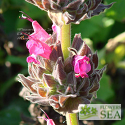
(Little Hummingbird Sage or Pitcher Sage) At one-fourth to one-half the size of our other Hummingbird Sages, this is the smallest variety of Salvia spathacea that we grow.
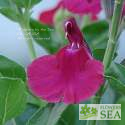
(Elk Pomegranate Autumn Sage) We're proud to say that this is an FBTS cultivar. It is one of the finest dark flowered, compact Autumn Sage varieties we have seen. Its extraordinarily large, raspberry blossoms bloom from spring into fall.
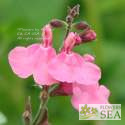
(Scorching Pink Mountain Sage) Compact and small, this Mountain Sage is another fine groundcover for Southern California, the Southwest and Texas. Similar to Salvia microphylla 'Heatwave Glimmer', it not only survives but thrives in extreme heat.
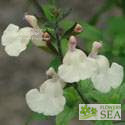
(Glimmering White Mountain Sage) Heatwave Glimmer isn't a mirage. It is a Salvia microphylla that tolerates extremely hot climates as well as cooler regions. It doesn't just survive; it thrives in the heat of Southern California, the Southwest and Texas.
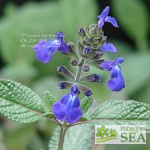
(Elk Blue Little Sage) if it were up to us, we would never have named this plant Little Sage. Although it is dainty, it is also one of the most fascinating species we grow. We particularly love its pebbly, oval leaves that are a shiny purple/green on top and a furry white below.
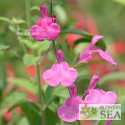
(Trinity Mountain Sage) Heat and drought tolerant, this Salvia microphylla is native to Northeastern Mexico where summers are dry and temperatures can rise to more than 100 degrees F. It can survive winter temperatures down to 0 degrees.
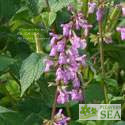
(Temascaltepec Sage) In full bloom, which is all year in mild climates, this mid-sized Salvia has far more flowers than foliage. Each 1/2-inch-long, bright pink bloom has two dark pink/purple spots and a pair of white stripes. The small, slightly furry leaves add to its soft, pleasing look.
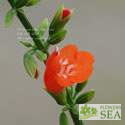
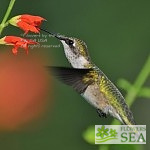
(Giant Brazilian Sage) Yes, this one is gigantic. The first season we grew this heat-tolerant sage, it reached 8 feet tall by July! Masses of small, red-orange, trumpet-shaped flowers attract hummingbirds and honeybees to long, upward curving flower spikes towering over heart-shaped foliage.
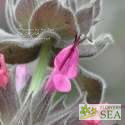
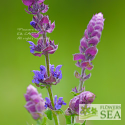
(Stem Clasping Violet Sage) Like a candelabra lit up with whorls of violet blossoms, the erect, branching flower spikes of Salvia amplexicaulis make this native of Southeastern Europe shine. On the Grecian island of Thassos, it brightens areas near the beach.
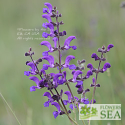
(Siberian Sage) Deep violet flowers surrounded by burgundy bracts form a handsome contrast with the pebbly, mint green foliage of this drought-resistant sage. It comes from the Central Asian steppe, which is similar in climate and geography to America’s high plains.
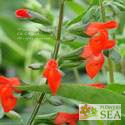
(Eyelash Sage) All Salvia blepharophylla varieties are native to Mexico, but this one was hybridized in Germany by plant breeder Christiaan Unger. Hairs on the edge of the sageâs dark green leaves give it the appearance of having eyelashes. It is a compact, slightly mounding Salvia that spreads gradually by underground stolons.
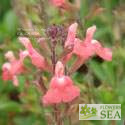
(Salmon Autumn Sage) Creamy salmon-colored flowers with white throats make this elegant Autumn Sage perfect for a pastel garden or as a cooling color in a mixed sage border. Bloom time is spring into fall for this petite Salvia greggii native to the American Southwest and Mexico.
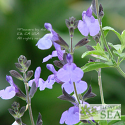
(Elk Blue Moon II Jame Sage) The phrase "blue moon" signifies a rare event. Elk Blue Moon Jame Sage is an unusual combination for a Salvia x jamensis hybrid -- dusky violet flowers with pale-blue throats, dark blue calyxes and mid-green foliage.
Note: This is a new (2014) cultivar that we chose to replace the original 'Elk Blue Moon'. It is a superior grower, and otherwise very similar.
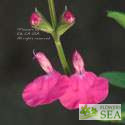
(Wild Watermelon Mountain Sage) Large, watermelon-pink flowers and the fruity fragrance of this long-blooming sage's mid-green, veined leaves make this Mountain Sage a treat to grow.
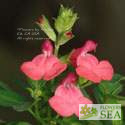
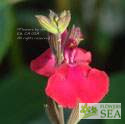
(Heatwave Red Mountain Sage) Compact and small, this Mountain Sage is another fine groundcover for Southern California, the Southwest and Texas. Similar to Salvia microphylla 'Heatwave Glimmer', it not only survives but thrives in extreme heat.
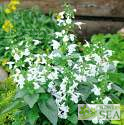
(Snow Nymph White Tropical Sage) Butterflies, hummingbirds and honeybees enjoy this award winner, which is an outstanding choice for pure white color from June to autumn. This type of Tropical Sage is generally the first to flower for us.
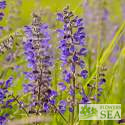
(Indigo Meadow Sage) When massed, this European sage compels attention during summer with its upright, foot-long spikes of deep violet-blue flowers and hairy, gray-green, basal foliage.
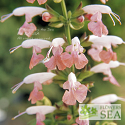
(Summer Jewel Pink Tropical Sage) Butterflies, hummingbirds and honeybees enjoy this Fleuroselect Gold Medal winner, which is an outstanding choice for bright pink & white color from June to autumn. This type of Tropical Sage is generally the first to flower for us.
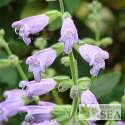
(Mystery Yunnan Sage) Sometimes we come across a beauty that has no name. This lovely species from China's Yunnan province is an excellent example. Aside from lacking scientific and common names, it arrived here as an imported seed with little information about how the plant was discovered.
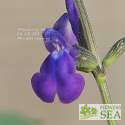
(Nuevo Leon Hybrid Sage) Imagine tiny, smooth, green leaves and deeper lavender-blue flowers than those of Salvia lycioides x greggii 'San Isidro'. With its midnight purple flowers, Nuevo Leon is a dramatic Salvia greggii hybrid.
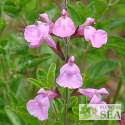
(Glittering Pink Mountain Sage) Mountain Sage (Salvia microphylla) handles hot climates as well as cooler coastal regions. It withstands the high temperatures of Southern California, the Southwest and Texas.
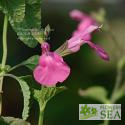
(Rosie O'Grady Mountain Sage) Honeybees and hummingbirds love the large, bright pink flowers of Salvia microphylla 'Rosie O'Grady', a drought-resistant sage. Dense and fragrant, it's large, glossy green leaves are veined and have finely serrated edges. This is a lush choice for dry gardens.
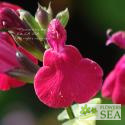
(Killer Cranberry Mountain Sage) Masses of magenta flowers on tall spikes lure honeybees and hummingbirds to the rich nectar of Salvia microphylla 'Killer Cranberry'. Its prolific flowers are a killer attraction for people too.
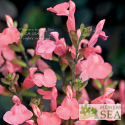
(Blast Pink Mountain Sage) Long blooming Salvia microphylla 'Heatwave Blast' produces prolific quantities of large, dusky salmon-pink blossoms and dense, mid-green foliage.
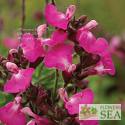
(Sparkle Pink Mountain Sage) Long blooming Salvia microphylla 'Heatwave Sparkle' produces prolific quantities of deep mauve-pink blossoms with white throats and dense, mid-green foliage.
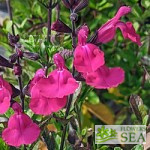
(Brilliance Pink Mountain Sage) Long blooming Salvia microphylla 'Heatwave Brilliance' produces prolific quantities of deep reddish-pink, or cerise, blossoms along with dense, mid-green foliage.
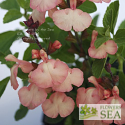
(Glow Peach Mountain Sage) Long blooming Salvia microphylla 'Heatwave Glow' produces prolific quantities of soft peach-to-apricot blossoms along with dense, mid-green foliage.
The following terms were added to your search to help improve the result. Click here to exclude these extra terms from the search.
- idea
Results for ideal from the blog
| 1. Drought-Resistant Beauties: A Guide to the Salvia greggii and S. microphylla Group |
| It can be a long journey from discovery to popularity for a plant. Currently, the most widely sought group of Salvias is the one encompassing S. greggii , and S. microphylla , which are commonly known as Autumn Sage and Mountain Sage. They caught the eye of naturalists traveling the American Southwest and Mexico's Sierra Madre mountains in the mid-to-late 1800s. However, they didn't take root in garden catalogs for well over 100 years. |
| Getting Started with Salvias |
| 2. Getting Started: Salvias for New England |
| Some people think you only find sage and coyotes out West. But Canis latrans, the Eastern Coyote, slipped into New England in the 1930s, and who knows when all the sages arrived? The New England Wild Flower Society notes that Lyreleaf Sage ( Salvia lyrata ) is the region's only native sage. It's one among many Salvia species grown in the Botanic Garden of Smith College in Massachusetts, which has one of the largest collections of sage in the region. Flowers by the Sea Online Plant Nursery raises hundreds of sages, including many northeastern favorites. |
| 3. Getting Started: Salvias for the Midwest |
| Severe winter chill and summer heat coupled with extreme humidity are challenges that gardeners face in the Midwest. Many Salvias are excellent choices as long-blooming annuals in the region while others -- ones that can withstand cold winters -- are reliable perennials. Flowers by the Sea Online Plant Nursery explains the confusing Midwest boundaries from Ohio west to Kansas and North Dakota south to Missouri. It talks about the range of USDA Plant Hardiness Zones in the region and the kinds of sages that grow best there. |
| New at FBTS |
| 4. Grow a Riot of Color with New Salvia Cottage Garden Collections |
| Cottage gardens make humble homes look spectacular with their densely packed color and foliage. FBTS Cottage Garden Collections are designed to brighten your yard with a riot of Salvias and companion plants. |
| Sacred Sages |
| 5. A Guide to Growing and Respecting Sacred White Sage |
| White Sage (Salvia apiana) is a sacred plant for Native Americans, especially tribes in its Southern California native lands. It's a challenging plant to grow. Flowers by the Sea Farm and Nursery talks about the history and religious use of Salvia apiana as well as providing a guide to growing it. |
| Hummingbirds in the Garden |
| 6. Hummingbird Falls Sage: Answers to Your Questions |
| Hummingbirds are vital pollinators that need lots of rich nectar to survive and keep gardens blooming. Salvia BODACIOUS 'Hummingbird Falls' is a unique hanging basket plant that is a natural replacement for plastic nectar feeders. |
| Shade Gardening |
| 7. Made for Shade: Japanese Woodland Salvias |
| Sturdy, shade-loving Japanese Salvias are lovely additions to woodland gardens with their lush, large-leafed foliage and delicate-looking flowers in colors including pinks, purples and yellows. They're ideal for bordering shady paths where they invite visitors to pause for close-up views. Flowers by the Sea suggests Japanese species for woodland gardens and organizes them according to their cold hardiness. |
| New at FBTS |
| 8. New at FBTS: Salvia x 'Ultra Violet' Defies Heat and Cold |
| In the Rocky Mountain West, conditions can swing from hellishly hot, dry summers to freezing cold winters. Many Southwestern Salvias are ideal for the sunbaked summers but have trouble surviving chilly Zone 5 winters. So we appreciate the cold hardiness as well as the drought resistance of one of our newest hybrid cultivars, Ultra Violet Hybrid Sage ( Salvia lycioides x greggii ‘Ultra Violet’). |
| Cultivating Color |
| 9. Pantone Pageant: "Tender Shoots Green" Designer Salvias |
| Lime is the kind of bright, cheerful color that practically shouts, “Hey, look at me!” Limelight Mexican Sage (Salvia Mexicana ‘Limelight’) is the kind of plant that makes you say, “Hey, look at that! Let’s plant it.” It brightens the landscape with its startling contrast of chartreuse-lime foliage and deep violet-blue flowers. Limelight is a poster plant for “Tender Shoots 14-0446” by Pantone color corporation. |
| Quick Digs |
| 10. Quick Digs: Putting Salvias to Bed with Winter Mulch |
| During spring, a heavy coat of fall leaves or wood mulch isn't good for Salvias, because it can cause fungal problems that attack crown and roots. But in winter, organic mulches are ideal for blanketing the foliage and root area of sages. Mulch is particularly useful in protecting protect plant roots against injury from freeze-and-thaw cycles, especially for new fall plantings.This is the second article in our Quick Digs series on preparation for winter in the Salvia garden. |
| 11. Salvia Soothes Eye, Heart and Honeybees in Remembrance Gardens |
| In the days following the terrorist destruction of New York’s World Trade Center on September 11, 2001, one article in The New York Times focused on the recovery of 30 acres of gardens of the Battery Park City Parks Conservancy a few blocks south of where the Twin Towers once stood. |
| 12. Salvia x jamensis: Painting the Landscape with Pastels |
| Planning a flowerbed with pastel bicolored Salvia x jamensis is a bit like organizing a fancy sweet 16 birthday party. It takes finesse and the right guest list of complementary perennials and annuals for fun and harmony. These Salvias are colorful, but not boisterous flowers. |
Common terms in this search: little hummingbird sage pitcher one-fourth one-half size our other sages smallest variety spathacea grow topped deep pink flowers lighter rosy bracts one also favorite its short flower spikes numerous from winter into spring they blossom abundantly large clusters about inches above plants sticky sweetly fragrant basal foliage spreads slowly underground runners most adaptable varieties offer less-than-perfect conditions because tolerates heat