
Advanced Search
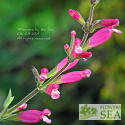
(Hadspen Roseleaf Sage) If you plant this sage in a mild-climate area where hummingbirds overwinter, you'll likely find hummers zinging back and forth among its magenta pink blossoms from fall through spring.
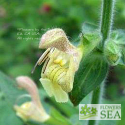
(Himalayan Cloud Sage) Nepal's Muktinath Valley -- a sacred site for Hindus and Buddhists -- is the place to go to see this majestically tall shade perennial in the wild. It grows at altitudes up to 14,000 feet and often emerges while the ground is still snowy.
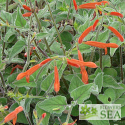
(Oaxaca Orange Wooly Sage) Tall, eye-catching spikes of dusky red-orange flowers that bloom from summer into fall make this one of our most impressive Salvias. Plus it's cold hardy into Zone 7.
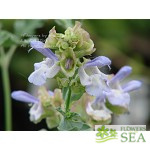
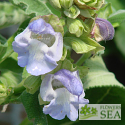
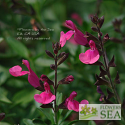
(Black Cherry Autumn Sage) Ripe Bing cherries come to mind when viewing the rich purple flowers of this full-sun sage that is adaptable to partial shade. Butterflies, honeybees and hummingbirds are drawn to its blossoms from spring into fall.
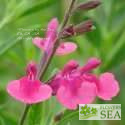
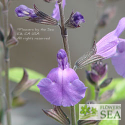
(Azure Hybrid Sage) Despite its name, the flowers of this tiny hybrid aren't really blue. They are a light purple. Due to its size, long bloom time, heat tolerance and drought resistance, Salvia x 'Mesa Azure' is a fine groundcover for areas where summers are hot and dry.
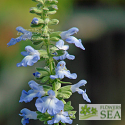
(Big Pitcher Sage) As its scientific name indicates, this sage has very large flowers. They are almost two-tone, changing from deep violet to a light blue or white at their base where they are cupped by dusky purple calyxes.
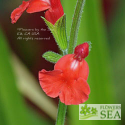
(Big Orange Mountain Sage) When temperatures are cooler in spring and fall, the persimmon-orange flowers of this large Mountain Sage darken. Gray-green foliage, bright green calyxes and reddish-green stems add to the plant's fascinating look, which mixes well with yellows and blues.
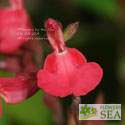
(Furman's Red Autumn Sage) Selected by noted Texas plantsman W.A. Furman in the 1970s, this hardy Texas native is beautiful and tough withstanding heat, drought and freezing winters. Its flowers, which bloom spring through fall, are a rich, saturated red bordering on magenta.
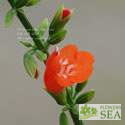
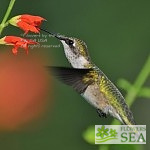
(Giant Brazilian Sage) Yes, this one is gigantic. The first season we grew this heat-tolerant sage, it reached 8 feet tall by July! Masses of small, red-orange, trumpet-shaped flowers attract hummingbirds and honeybees to long, upward curving flower spikes towering over heart-shaped foliage.
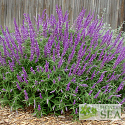
(Santa Barbara Mexican Bush Sage) This compact Mexican Bush Sage was found in the Santa Barbara garden of Kathiann Brown. It is, without a doubt, the finest short Mexican Bush Sage -- hardy, tough and long blooming. Add drought tolerance and dark, rich purple flowers to its list of merits.
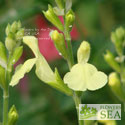
(Elk Lemon Light Jame Sage) We are proud to offer this luminescent, pure yellow Salvia x jamensis -- a color breakthrough from our own breeding program. The bright, light blossoms cool the landscape similar to white flowers, but with colorful impact. The glossy green leaves are quite small - a very attractive and distinctive characteristic.
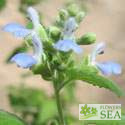
(Mejorana) In Spanish, Mejorana means ‘marjoram.” Similar to oregano-type Marjoram – another Mint family member -- this sage is used to flavor meat dishes. Our cultivar, which is native to Texas and Mexico, has lovely bluish-purple flowers that bloom summer to fall amid fragrant, fine, furry green foliage.
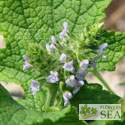
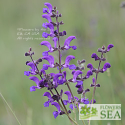
(Siberian Sage) Deep violet flowers surrounded by burgundy bracts form a handsome contrast with the pebbly, mint green foliage of this drought-resistant sage. It comes from the Central Asian steppe, which is similar in climate and geography to America’s high plains.
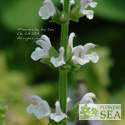
(Iranian Sage) Mixed in with short perennials that bloom over a wide range of seasons, Salvia staminea makes an attractive contribution to short borders during its summer bloom time. Our strain has dark bracts surrounding pastel white-to-blue-to-lavender flowers. The dark green, branching foliage has oblong to oval-shaped leaves.
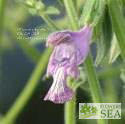
(san ye shu wei cao) So what do all those Pinyin words mean in this sage’s common name? We’ll give you an answer to the best of our ability in a minute. Meanwhile, we need to note that this medicinal Asian sage has handsome foliage and deep violet flowers.
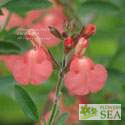
(Tangerine Ballet Hybrid Jame Sage) Soft pinkish-orange flowers with contrasting yellow eyes make this Jame Sage look as tasty as sorbet. Hardy to at least 10 degrees F, Tangerine Ballet is also heat tolerant, drought resistant and long blooming-- all marks of Salvias in the closely related Autumn and Mountain Sage group.
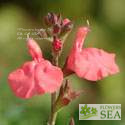
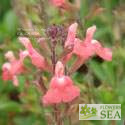
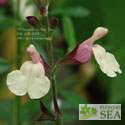
(Salmon Autumn Sage) Creamy salmon-colored flowers with white throats make this elegant Autumn Sage perfect for a pastel garden or as a cooling color in a mixed sage border. Bloom time is spring into fall for this petite Salvia greggii native to the American Southwest and Mexico.

(Elk Buttercup Jame Sage) Red flower buds unfurl into the surprisingly buttery yellow blossoms of Elk Buttercup. Subtly bicolored, the flowers have touches of light pink including fine hairs on the upper lip.

(Elk Butter Light Jame Sage) "Clear" is how we describe the translucent quality of Elk Butter Light's creamy yellow blossoms, which are supported by bright green calyxes. Unlike the green-tinged flowers of Elk Lemon Light Jame Sage, these blossoms are paler and one pure color.
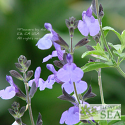
(Elk Blue Moon II Jame Sage) The phrase "blue moon" signifies a rare event. Elk Blue Moon Jame Sage is an unusual combination for a Salvia x jamensis hybrid -- dusky violet flowers with pale-blue throats, dark blue calyxes and mid-green foliage.
Note: This is a new (2014) cultivar that we chose to replace the original 'Elk Blue Moon'. It is a superior grower, and otherwise very similar.
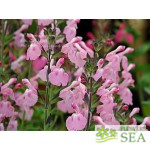
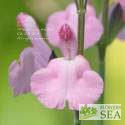
(Elk Cotton Candy Jame Sage) Rosy hairs on the upper lip and pale white throats highlight the translucent, blush pink blossoms of Elk Cotton Candy Jame Sage. Dark, deeply contrasting calyxes support the medium-size flowers.
(Recurved Sage) At home in the shady, high-altitude cloud forests of Southern Mexico and Guatemala, this large, lush sage requires a warm, moist climate. In cool climates, it can handle full sun. However, partial shade is a better choice in most gardens.
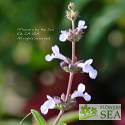
(Pacific Blue Sage) Whorls of deep lavender-blue flowers contrast brightly against the dark maroon stems of this likely hybrid of Salvia brandegeei and Salvia munzii.
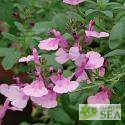
(Elk Bella Rosa Jame Sage) The large, creamy pink and burgundy flowers of this sage are stately in contrast with its deep green, veined, ovate foliage that is pleasantly fragrant. Elk Bella Rosa is as elegant as its name implies. It's also long blooming.
Results for such from the blog
| Getting Started with Salvias |
| 1. Getting Started: Salvias for Zone 5 |
| To bloom yearly, Salvia perennials and shrubs in USDA Hardiness Zone 5 need to tolerate deep freeze winters with average low temperatures of -20 degrees F. The success of Zone 5 sages also depends on local growing conditions. Learn more at Flowers by the Sea, an online, mail-order Salvia nursery. |
| 2. Getting Started: What Is Drought and Xeriscaping |
| Drought is a shortage of precipitation over a season or more as in California where four years of drastic declines in rainfall and snowpack have created severe watering cutbacks. Drought is also defined by what and whom it affects from agriculture to homeowners. Flowers by the Sea Farm and Online Nursery explains drought and xeriscape, a water-conserving form of landscaping that is effective for gardening during drought and in dry climates. This article is part of the FBTS Getting Started series for gardeners becoming acquainted with Salvias (true sages). It includes a brief list of drought-resistant sages. |
| Butterflies in the Garden |
| 3. Growing Habitat: Three Tough Milkweeds to Help Monarchs |
| Flowers by the Sea Farm and Online Plant Nursery is serious about wildlife gardening and grows a number of milkweed species considered among the best for supporting Monarch butterflies. Three of the nursery's toughest, loveliest milkweeds are Indian Milkweed (Asclepias eriocarpa), Showy Milkweed (Asclepias speciosa) and Common Milkweed (Asclepias syriaca). Read about the history of milkweeds and the reasons why Monarch butterflies are threatened due to a shortage of these tough yet lovely plants caused by herbicides. Learn how herbicides and pesticides harm Monarchs and other milkweed-loving pollinators. |
| Quick Digs |
| 4. Quick Digs: Improving Soil for Spring in Salvia Gardens |
| This is the fifth article in our Quick Digs series about getting ready for spring in Salvia gardens. The previous post talked about weed control. Now we dig into soil and amendments, which aren't just additions to legal documents. The word also refers to materials added to soil to improve its structure and chemistry. These include organic matter, such as compost, as well as chemical fertilizers and minerals (lime and crushed rock are examples). Choices depend on the plants you want to grow and the current make-up of your garden soil. |
| 5. Battles in the Salvia Garden: Controlling Spider Mites - Part II |
| Pollinators lose important food sources when Salvias and other nectar-rich flowers are destroyed by spider mites. This is Part 2 of a two-part series about understanding and overcoming these dangerous pests. Along with the non-chemical interventions described in Part 1 of this series, gardeners sometimes need the help of predatory insects and mites, insecticidal soaps and horticultural oils. Pesticides called miticides may also eventually be necessary, but should be the last resort. |
| Celebrity Salvias |
| 6. Channel Island Sages |
| Flowers by the Sea grows a number of native California sages, including threatened species such as the woody perennial shrubs Santa Rosa Island Sage ( Salvia brandegeei ) and Island Pitcher Sage ( Lepechinia fragrans ). Elusive is one adjective to attach to both plants, because they are rare in their native Channel Islands homelands off the coast of Southern California where they are endangered. |
| Container Gardening |
| 7. Container Gardening Basics: Selecting and Arranging Pots |
| Assembling a new planter with fresh potting soil and young plants is a feel-good activity similar to moving into a new home. Each pot and property is full of promise. Placing a single plant or a grouping in the right size of pot is like selecting a starter home for it that will encourage healthy growth. The type of material a pot is made from also affects development. Flowers by the Sea Online Salvia Nursery explains how to choose correct pot sizes as well as pot styles, sizes, colors and arrangements. Don't miss The Flowerpot Men music video! |
| 8. Drought-Resistant Beauties: A Guide to the Salvia greggii and S. microphylla Group |
| It can be a long journey from discovery to popularity for a plant. Currently, the most widely sought group of Salvias is the one encompassing S. greggii , and S. microphylla , which are commonly known as Autumn Sage and Mountain Sage. They caught the eye of naturalists traveling the American Southwest and Mexico's Sierra Madre mountains in the mid-to-late 1800s. However, they didn't take root in garden catalogs for well over 100 years. |
| Xeric Choices |
| 9. Four Top Drought-Resistant Perennials for Dry Shade |
| Searching for shade-tolerant plants is difficult. Finding ones that grow well in dry conditions, especially as groundcovers, is even more challenging. Flowers by the Sea talks about different types of shade and four drought-resistant perennials for these varying levels of sun exposure. It also explains how to search the company's extensive product menu. |
| Getting Started with Salvias |
| 10. Getting Started: Salvias for New England |
| Some people think you only find sage and coyotes out West. But Canis latrans, the Eastern Coyote, slipped into New England in the 1930s, and who knows when all the sages arrived? The New England Wild Flower Society notes that Lyreleaf Sage ( Salvia lyrata ) is the region's only native sage. It's one among many Salvia species grown in the Botanic Garden of Smith College in Massachusetts, which has one of the largest collections of sage in the region. Flowers by the Sea Online Plant Nursery raises hundreds of sages, including many northeastern favorites. |
| 11. Getting Started: Salvias for the Coastal Southeast |
| True sages are members of the Salvia genus and number in the hundreds. They are native to a wide variety of environments worldwide, which is why some are ideal for the dry gardens of California and others can handle the abundant moisture of the American Southeast. Flowers by the Sea raises many sages that grow well in the Southeast, including some that are either native to the region or have jumped fences from gardens into the wild. |
| 12. Getting Started: Salvias for the Rocky Mountain West |
| High altitude, distance from large bodies of water and powerful chinook winds make the Rocky Mountain West a dry gardening environment even in years of higher than average rain and snow. The region's steep mountains have a major impact on where and how precipitation falls. Instead of a single mountain chain, the Rocky Mountains are made up of 100 separate ranges. Similarly, the Salvia genus contains a broad range of sages, many of which thrive in the climactic extremes of the Mountain West. |
Common terms in this search: hadspen roseleaf sage plant mild-climate area where hummingbirds overwinter youll likely find hummers zinging back forth among its magenta pink blossoms from fall through spring hottest climates requires bit deep shade appreciates average rich soil regular watering largest variety species cultivate sometimes growing more than feet tall wide makes fine screen background planting such borders our ofuncertain origin may have