
Advanced Search
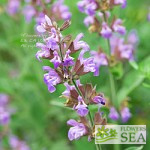
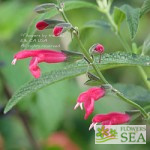
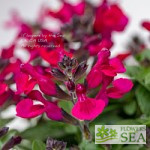
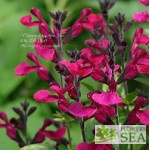
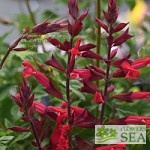
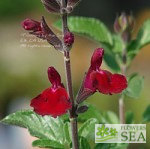
(Roman Red Sage) This handsome, long blooming hybrid sage features a dramatic combination of scarlet flowers and deep rust-to-merlot calyxes. Deadheading spent blossoms prolongs bloom time.
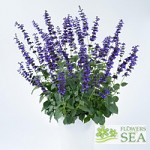
(Magic Wand Sage) Salvia x ‘Magic Wand’ is perky with vertical spikes of long blooming, rich purple flowers and dense, mid-green foliage. Overall, it reminds us of Salvia x ‘Big Blue’, but has smaller flowers and usually doesn’t grow as tall.
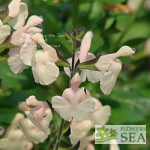
(Elk Morning Sun Jame Sage) Kelly green and black calyxes support the long blooming, creamy white and pale pink flowers of Salvia x ‘Elk Morning Sun’. A waterwise sage, it likes average watering but resists drought.
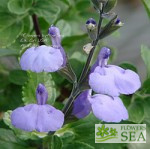
(Elk Blue Moon III Jame Sage) Dark calyxes cup dusky blue flowers that age to lavender and rise up from the veined, mid-green foliage of Salvia x ‘Elk Blue Moon III’.
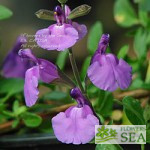
(Elk Grape Ape Jame Sage) Bountiful flowers that are larger than normal for Jame Sage cover Salvia x ‘Elk Grape Ape’ in a cloud of purple that is sort of amethyst to pinot gris in color.
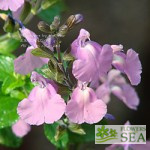
(Elk Smokey Grape Jame Sage) We think the dusky lavender flowers of Salvia x ‘Elk Smokey Grape’ look like the dusty, pale reddish-blue of Malbec grapes. This is a floriferous beauty.
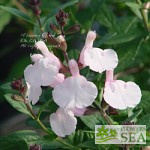
(Elk Pink Cloud Jame Sage II) Abounding with clusters of large, soft pink flowers on spreading branches, Salvia x ‘Elk Pink Cloud II’ looks like a fluffy, cumulonimbus cloud.
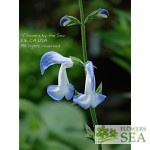
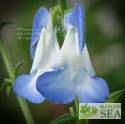
(Dot's Delight Bicolor Gentian Sage) This sage turns heads, because its large, white and blue bicolored flowers make it a unique variety of Gentian Sage. Developed in the UK, Dot's Delight is less vigorous and less sun tolerant than other varieties of the species. This is our own tested seed strain of this rare plant.
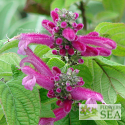
(Big Leaf Scandent Mexican Sage) Bigger leaves, larger, looser flowers and pink petioles -- the tiny stemlets connecting leaves to stems -- differentiate this this clone from its parent plant Salvia iodantha. A winter-blooming perennial, it's covered with velvety, 8-inch-long, magenta blossoms from fall into winter.
The following terms were added to your search to help improve the result. Click here to exclude these extra terms from the search.
- par, parents
Results for parent from the blog
| 1. Drought-Resistant Beauties: A Guide to the Salvia greggii and S. microphylla Group |
| It can be a long journey from discovery to popularity for a plant. Currently, the most widely sought group of Salvias is the one encompassing S. greggii , and S. microphylla , which are commonly known as Autumn Sage and Mountain Sage. They caught the eye of naturalists traveling the American Southwest and Mexico's Sierra Madre mountains in the mid-to-late 1800s. However, they didn't take root in garden catalogs for well over 100 years. |
| 2. Fall Cleanup: Plant Placement and Pesky Problems |
| You don’t usually have to fuss over Salvias to give them what they need. Yet the end of fall and other growing seasons are good times to seek solutions to problems that affect plant vigor. It is a time for a call to attention as well as a cleanup call to action. |
| 3. Battles in the Salvia Garden: Pretty Southern Pink Moth |
| Southern Pink Moth (Pyrausta inornatalis) is diminutive and pretty, but it’s a powerful pest in Salvia gardens. As the common name indicates, it is primarily found in the South. Yet it is flitting into gardens further north. Read more to learn how to identify and control this pest. |
| Celebrity Salvias |
| 4. Celebrity Salvias: Hot Heatwave Hybrids from Australia |
| Waterwise landscapes don't have to be cactus gardens if you grow leafy, colorful drought-resistant Salvias, such as Australian Heatwave™ Mountain Sages, which are crosses of Salvia microphylla and S. greggii . Hybridizers Howard Bentley and Steve Eggleton of Plant Growers Australia used these tough American and Mexican native plants to create their series. One goal was to aid water conservation during their nation's hot, dry summers. |
| Getting Started with Salvias |
| 5. Getting Started: Salvias for New England |
| Some people think you only find sage and coyotes out West. But Canis latrans, the Eastern Coyote, slipped into New England in the 1930s, and who knows when all the sages arrived? The New England Wild Flower Society notes that Lyreleaf Sage ( Salvia lyrata ) is the region's only native sage. It's one among many Salvia species grown in the Botanic Garden of Smith College in Massachusetts, which has one of the largest collections of sage in the region. Flowers by the Sea Online Plant Nursery raises hundreds of sages, including many northeastern favorites. |
| Hummingbirds in the Garden |
| 6. How David Verity Cuphea Became a Famous Hummingbird Flower |
| When massed in borders or standing out as a main attraction in a container planting, Cuphea x ‘David Verity’ is a visual feast for people as well as an actual feast for small wildlife. Rich in nectar, the plant’s dainty, cigar-shaped, orange-red flowers nestle amid a cloud of mid-green leaves shaped like tiny garden trowels. |
| Shade Gardening |
| 7. Made for Shade: Japanese Woodland Salvias |
| Sturdy, shade-loving Japanese Salvias are lovely additions to woodland gardens with their lush, large-leafed foliage and delicate-looking flowers in colors including pinks, purples and yellows. They're ideal for bordering shady paths where they invite visitors to pause for close-up views. Flowers by the Sea suggests Japanese species for woodland gardens and organizes them according to their cold hardiness. |
| New at FBTS |
| 8. New Product Filtering Tool Helps You with Decision Making |
| Flowers by the Sea now offers a powerful, do-it-yourself, product-filtering tool that makes plant selection easier and faster. It sets up a matrix of choices to help customers sort possible selections for their gardens based on USDA cold hardiness zones, sun exposure, mature height and spread of plants, soil type and water needs. This article explains how the tool works and provides examples of how to use it. |
| Portraits in Gardening |
| 9. Portraits in Gardening: Michael and Kathi Rock's Hummingbird Journey |
| A wedding gift led to Kathi Johnson Rock and Michael Rock's passion for hummingbirds. These Wisconsin birders offer tips and plant suggestions for hummingbird gardeners at FBTS. Although now known as Madison's "Hummingbird People," the Rocks aren't ornithologists or biologists. They are home gardeners and customers of Flowers by the Sea. This article includes a list of favorite hummingbird plants found in the Rocks' gardens. |
| Quick Digs |
| 10. Quick Digs: Salvia Groundcovers Suppress Weeds |
| Quick Digs is a serial containing short posts focused on a central issue about Salvia gardening. The topic for the first series is Salvia groundcovers for weed control, and this is the first article. Great groundcovers help conserve soil moisture and leave little room for weeds to grow. This is true of many colorful, fragrant Salvias that spread freely. However, it may be that the essential oils creating the pleasant aromas of many Salvias are also helpful in suppressing weeds. Many researchers refer to this apparent trait as the “Salvia phenomenon.” |
| Sage Experts |
| 11. Sage Experts: How Dr. Dufresne Became the Sultan of Salvia |
| December 18, 2018 - With great sadness we have learned that our friend Rich as passed away at his home in Candor, NC. A chance encounter with Pineapple Sage led organic chemist Dr. Richard F. Dufresne to become one of America's leading Salvia researchers. Sage Experts focuses on specialists -- both professionals and amateurs -- who have helped popularize the Salvia genus. Dufresne's life course changed the day he visited Rhode Island's Biodynamic Meadowbrook Herb Farm. Discovering the heady pineapple fragrance of Salvia elegans at Meadowbrook gave him a cause. |
| 12. Sage Experts: How Robin Middleton's Gardens Bloomed |
| Sage Experts focuses on Salvia specialists -- both amateurs and professionals -- in settings ranging from home gardens to university laboratories. This article concerns Robin Middleton of Surrey, England, and his popular Robins Salvias website. The longtime horticulturist grows more than 100 Salvia species and cultivars in his garden and greenhouses. |
Common terms in this search: auriculatesage both culinary sage officinalis greek fruticosa grown spice trade commerce they closely related share much same range wild hybrids between two have been known exist long while these many names newe ya'ar silver being most common natural hybrid species found island croatia accepted name auriculata our plants result hybridization gardens friend greece frescoes crete dating depict used phoenicians greeks