
Advanced Search
Advanced Search
1 to 1 of 1
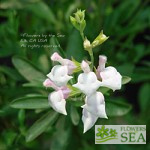
(Teresa's Autumn Sage) Powder pink and white bicolor flowers make this sage look like an over-large bridal bouquet with densely leafed, dark green, mounding foliage. This sage appreciates some shade, but can withstand heat and moderate drought.
1 to 1 of 1
The following terms were added to your search to help improve the result. Click here to exclude these extra terms from the search.
- lone
Results for Lone from the blog
| Cultivating Color |
| 1. Cultivating Color: Tracking the Elusive History of Autumn & Mountain Sage Warm Pastel Hybrids -- Part I |
| Whether planned or accidental, hybrids happen. This is especially true among the closely related Southwestern and Mexican species of Autumn Sage (Salvia greggii) and Mountain Sage (S. microphylla). They are native to different areas of the Southwest and Mexico, but cross freely when they meet. This story is the first installment in a two-part series initiating our Cultivating Color series. It involves the late Dr. Richard F. Dufresne, a Salvia specialist who helped us track the history of warm-colored S. x jamensis hybrids. |
| Salvias Down South |
| 2. Salvias Down South: Texas Butterfly Favorites |
| Wildscaping is a way to landscape to attract pollinators. Butterflies are one of the most important. In Texas there are 463 species. Steering some of this herd of Lepidoptera toward your yard is easier if you know what butterflies frequent your region and which plants they favor for nectar and for laying their eggs, including Salvias. The Texas Parks and Wildlife Department, the Lady Bird Johnson Wildflower Center and Flowers by the Sea all can help Southwestern butterfly gardeners. |
| Salvia Small Talk |
| 3. Salvia Small Talk: Growing a Native Sage Garden |
| Most native plant gardens encompass species native to the region or state in which a gardener lives. However, some native gardens -- such as the New England Wild Flower Society's famous Garden in the Woods -- are based on a broad variety of plants native across America. |
| Butterflies in the Garden |
| 4. Salvias Down South: Southern California Butterfly Favorites |
| Wildscaping a butterfly-friendly garden in Southern California is an act of kindness, especially toward imperiled species. Gardeners from Santa Barbara southward may want to group coastal sage and chaparral plants in their butterfly gardens, because those are among favorite sources of nectar for adult butterflies and host plants for caterpillars. Sages are popular nectar choices. Plants, such as Milkweeds and Impatiens, that work well both as nectar providers and caterpillar hosts are important additions. |
| Hummingbirds in the Garden |
| 5. A Gardeners Guide to Hummingbird Sage |
| Among the hummers' favorites: Salvia spathacea, commonly known as Hummingbird Sage. As it name suggests, this California native produces the hummingbirds' flower of choice, blooming from late winter through summer -- and sometimes again in Fall -- with rose-pink to magenta blossoms. Available in six varieties, this robust perennial not only attracts hummers with its abundant nectar, it's easy to grow and enhances any landscape with its aromatic blooms and fragrant evergreen foliage. |
| Ask Mr. Sage |
| 6. Ask Mr Sage: What Kind of Plant Is a Clone? |
| It's helpful to understand botanical terminology such as clone, variety, and cultivar. Mr. Sage explains what the three words mean and how the processes of cloning and plant development work. Ask Mr. Sage is a regular feature of the FBTS Everything Salvias Blog and is based on questions from customers. |
| New at FBTS |
| 7. Himalayan Sage Is the Salvia Collector’s Holy Grail: Part 1 |
| For plant collectors, a mystique surrounds rare species like Salvia hians (Himalayan or Kashmir Sage). This is especially true when there is uncertainty about what the plant should look like. Perhaps the most famous image of S. hians is a 2012 photograph of UK plant collector Chris Chadwell next to an abundantly blooming stand of large violet-blue flowers with white lower lips. Why doesn’t the Flowers by the See variety of this rare species look exactly like the plant Chadwell found — a plant that seems to be the Holy Grail of Salvia collectors? We’ll do our best to explain. |
| Book Reviews |
| 8. Book Review: Stop. . .and Smell the Mints |
| Randy Collins was surprised when he got hooked on horticulture following retirement. But after a move to South Carolina, he was even more surprised at how deer destroyed his gardens until he began growing lots of mint family ( Lamiaceae ) plants like Salvias. It inspired him to write Stop...and Smell the Mints . |
| 9. How to Defend Homes Against Wildfires & Firescape with Salvias |
| Home improvement, including landscaping, involves lots of decisions. This is especially true when modifying your property to protect against wildfires. Flammability is usually the last thought on a gardener's mind when planning what to purchase. But if you live in wildfire country and are a Salvia lover, you may have noticed sages on lists of fire-resistant plants. Read more about wildfire preparedness at FBTS. |
| 10. In the Native Garden: Colorful California Salvias Plus a Cousin |
| Native plants, including California's many indigenous sages, are like the boys or girls next door who were overlooked until outsiders discovered their good looks and other fine attributes. Flowers by the Sea grows hardy, drought-resistant California Salvias that are native to a broad swath of the West Coast ranging from Northern Baja to Southern Oregon. Many tolerate heat. They are well suited to waterwise landscapes, including dry gardens. |
| Butterflies in the Garden |
| 11. Leaving the Light on for Butterflies at the Leaf Litter Motel & Wood Pile Lodge |
| If you want to invite butterflies to lodge in your backyard overnight or during winter, building pretty butterfly houses won't succeed. They need all kinds of messy hangouts to ride out a rain storm, sleep through the night safely and endure winter in your garden. You can build a butterfly hostel without hammer and nails. |
| 12. Our Paperless Catalog Is Wallet-Friendly and Ecofriendly |
| Customers often ask us how they can receive a print catalog of the hundreds of plants grown and sold by our online nursery, Flowers by the Sea. The answer is that we have never printed a catalog and never will for financial, managerial and environmental reasons. We prefer our online-only garden catalog, because it is wallet-friendly, encourages diversity in the garden, offers efficiency and helps protect the environment. |
Recent Searches
Common terms in this search: teresa's autumn sage powder pink white bicolor flowers make look like over-large bridal bouquet densely leafed mounding foliage appreciates some shade but can withstand heat moderate drought discovered texan david steinbrunner who named cultivar after his wife teresa fits well mixed planting another our lone star state favorites greggii texas wedding' first person bring notice horticultural world josiah gregg whom