
Advanced Search
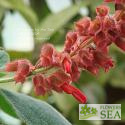
(Giant Colombian Red Mountain Sage) In 1898, physician and medical plant researcher Henry Hurd Rusby (1855-1940) found this towering sage with large, deep red flowers in the Sierra Nevada de Santa Marta mountains of Colombia.
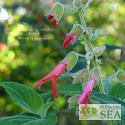
(Giant Colombian Pink Mountain Sage) In 1898, physician and medical plant researcher Henry Hurd Rusby (1855-1940) found the red-flowered variety of this towering species in the Sierra Nevada de Santa Marta mountains of Colombia. This one has large, reddish-pink flowers.
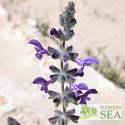
(Wooly Arabian Sage) "Radiant" is the word that garden writer and Salvia specialist Betsy Clebsch uses to describe the halo of white hairs covering the foliage and calyxes of Salvia lanigera.
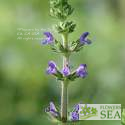
(Wild Sage) Toothed and attractively wrinkled, the gray-green, basal foliage of Wild Sage contrasts prettily with deep lavender-to-purple flowers supported by grassy green bracts. This cold-hardy sage is native to northern Africa and parts of Asia and Europe.
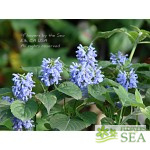
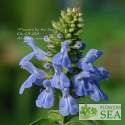
(Smith College Mystery Sage) This mysterious species came to us via Smith College in Northampton, Massachusetts. We refer to it as "Mystery Sage" as the origins of this fine plant are unclear.
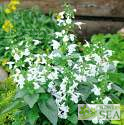
(Snow Nymph White Tropical Sage) Butterflies, hummingbirds and honeybees enjoy this award winner, which is an outstanding choice for pure white color from June to autumn. This type of Tropical Sage is generally the first to flower for us.
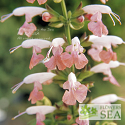
(Summer Jewel Pink Tropical Sage) Butterflies, hummingbirds and honeybees enjoy this Fleuroselect Gold Medal winner, which is an outstanding choice for bright pink & white color from June to autumn. This type of Tropical Sage is generally the first to flower for us.
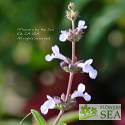
(Pacific Blue Sage) Whorls of deep lavender-blue flowers contrast brightly against the dark maroon stems of this likely hybrid of Salvia brandegeei and Salvia munzii.
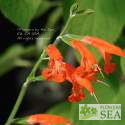
(Mystery Peruvian Sage) Airy spikes of fuzzy, bright orange-red flowers and grassy green calyxes mark this Peruvian sage as a mystery worth pursuing. Little is certain about its parentage.
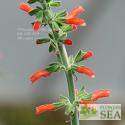
(Cundinamarca Sage) This Colombian Salvia is difficult to obtain outside of its home country. As far as we know, Flowers by the Sea is the first nursery to offer it in the United States.
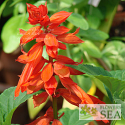
(Giant Red Scarlet Sage) Looking to fill in large shady area? This may be your best bet. This variety is largest that we know of, growing to 6 feet - 7 feet - or even more in a sheltered shady spot.
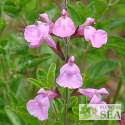
(Glittering Pink Mountain Sage) Mountain Sage (Salvia microphylla) handles hot climates as well as cooler coastal regions. It withstands the high temperatures of Southern California, the Southwest and Texas.
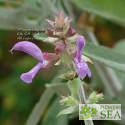
(Wooly Canary Island Sage) The pale magenta, parrot-beak flowers of this sage, supported by deeper magenta bracts, heat up the landscape. But when you get close, it may be the velvety texture of the foliage that makes you sigh.
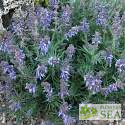
(Yugoslavian Cut Leaf Sage) This is a rare Baltic steppe plant that grows beautifully in sunny locations with little water and excellent drainage. It is endemic to a the Orlova Brdo region of the Former Yugoslav Republic of Macedonia.
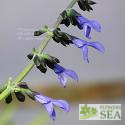
(Huntington Garden Mexican Sage) In areas with mild end-of-year weather, this sage is a tower of nectar for hummingbirds. Large blue-to-purple flowers shaped like open parrot beaks reach out from dark calyxes. Their spikes stretch out horizontally and gently curve upward from the plant's mid-green foliage.
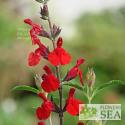
(Radio Red Autumn Sage) Dark calyxes support true red blossoms in Salvia greggii 'Radio Red', a 2015 introduction from the Darwin Perennials division of Ball Seed. Its tiny, smooth, elliptical leaves form a light, airy backdrop for the dramatic flowers.
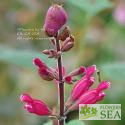
(Rosebud Pink Hybrid Sage) Protective, magenta pink, leaf-like bracts surround the buds of Salvia pulchella x involucrata like a hug, bursting open and eventually falling away as the fuzzy flowers blossom.
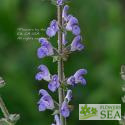
(Iranian Oil Sage) Butterflies and honeybees are drawn to the long blooming, dusky violet-blue flowers of Salvia atropatana. However, deer say no to its charms, due to its essential oils being less than tasty.
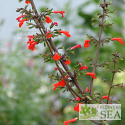
(Tall Red Colombian Sage) Salvia rubescens subsp. dolichothrix may tower over your head when in full bloom with its creamy red trumpet blossoms and dark calyxes. Its leaves are large and attractively textured.
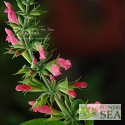
(Giant Karwinski's Sage) San Francisco arborist and gardener extraordinaire Ted Kipping developed this tower of creamy pinkalicious power that hummingbirds love. It's lush with bright green leaves that are large, pebbly and hairy on the underside.
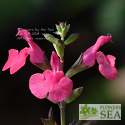
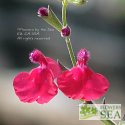
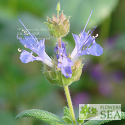
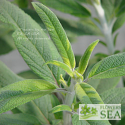
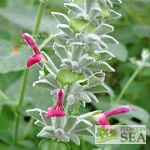
(White Headed Sage) One of the most visually stunning members of the genus, this large growing, tender, winter blooming species from the mountains of Ecuador will turn every head with its furry white calyxes and brilliant magenta red flowers.
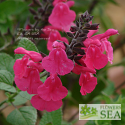
(Grace Pink Autumn Sage) Dark hot pink flowers and contrasting, dark bracts make this Autumn Sage stand out. Originally fom the JC Raulston Arboretum in North Carolina. This variety is large but compact, rugged, heat tolerant and capable of handling Zone 6 chill.
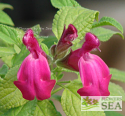
(Alice's Sage) We have John Fisher of Australia to thank for this fascinating intraspecific cross, which he named after his daughter. It really looks to be intermediate between the parents, and the fragrance of the leaves is divine.
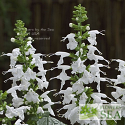
(Summer Jewel White Tropical Sage) Butterflies, hummingbirds and honeybees enjoy this All American 2016 winner, which is an outstanding choice for pure white color from June to autumn. The Summer Jewel varieties of Tropical Sage is generally the first to flower for us.
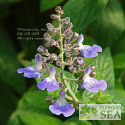
(Thryce Flowered Sage) A wonderfly floriferous shrubby species from the mountains of Jalisco, Mexico. The individual flowers are small, but so numerous as to be uncountable. The textured foliage makes this a stand out in the garden.
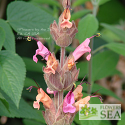
(Apricot Rose Hummingbird Sage) Large clusters of warm, apricot colored blossoms that age to a warm pink top the tall, thick flower spikes of this sage. This variety was selected from our warm apricot to peach seed strain and has truly unique coloration.
The following terms were added to your search to help improve the result. Click here to exclude these extra terms from the search.
- sages, sage, sageor
Results for Sages from the blog
| Hummingbirds in the Garden |
| 1. Red Birds in a Tree: How a Rare Wildflower Became a Hummingbird Garden Star |
| Red Birds in a Tree, known botanically as Scrophularia macrantha , is a rare, cold-hardy, Wild West perennial with cheery red flowers hummingbirds love. Southwest New Mexico botanist O.B. Metcalfe collected it in 1904. |
| Sacred Sages |
| 2. Sacred Sage: Pineapple Sage |
| Many kinds of Sage were considered sacred in ancient times due to their soothing, medicinal qualities. Pineapple Sage (Salvia elegans), which is native to Mexico and Guatemala, is still a highly regarded folk remedy for relieving anxiety, depression and high blood pressure. It is also one of America's most popular culinary sages and is a highlight of the USDA's National Herb Garden. |
| Sage Experts |
| 3. Sage Experts: Meet Huntington Gardens Curator Kathy Musial |
| The Sage Experts series focuses on Salvia specialists — both amateurs and professionals -- in settings ranging from botanic gardens to universities. Kathy Musial, curator of live collections at Southern California's Huntington Gardens, is the subject of this profile. If you imagine a great dinner party involving lots of garden talk, Kathy Musial would be an ideal guest who could share her experiences plant trekking in Australia and Chile or co-managing some 14,000 varieties of plants at Huntington. |
| New at FBTS |
| 4. Meet Salvia rosmarinus: A New Addition to the Sage Genus |
| Bees adore rosemary, the powerfully resinous Mediterranean native known both as a groundcover spilling over garden slopes and as an accent or tall hedge plant. Plant scientists who closely examined its DNA suggest moving the Rosmarinus genus into the Salvia genus. Flowers by the Sea now grows two kinds of Salvia rosmarinus. |
| 5. Salvia Summit II: An International Gathering of Sage Thought, March 7 to 10 |
| Salvias thrive in many different climates and parts of the world. Consequently, those who love the genus are an international tribe stretching from Alaska to Argentina and from South Africa to Southern California. Members of the tribe, from Salvia experts to home gardeners, will gather March 7 to 9 at Huntington Botanical Gardens in San Marino, California, for Salvia Summit II. Speakers will include academics, horticulturists, researchers and a forensic scientist specializing in Salvia chemistry. This event follows up on Salvia Summit I, which was held in 2008 on California's Central Coast at Cabrillo College. |
| Salvias Down South |
| 6. Salvias Down South: Salvia Success in Florida |
| Florida is one of the wettest states in the nation, yet it is a fine place to grow Salvias if you select shade-tolerant, moisture-loving species and ones native to Florida. Gardeners who are accustomed to growing Salvias in a dry climate face a variety of surprises in Florida gardens. These include recurrent periods of drought, many cloudy days and soil that is so poor it has to be amended for Salvias. |
| Butterflies in the Garden |
| 7. Salvias Down South: Southern California Butterfly Favorites |
| Wildscaping a butterfly-friendly garden in Southern California is an act of kindness, especially toward imperiled species. Gardeners from Santa Barbara southward may want to group coastal sage and chaparral plants in their butterfly gardens, because those are among favorite sources of nectar for adult butterflies and host plants for caterpillars. Sages are popular nectar choices. Plants, such as Milkweeds and Impatiens, that work well both as nectar providers and caterpillar hosts are important additions. |
| Salvia Small Talk |
| 8. Salvia Small Talk: Deep Watering vs. Sprinkling |
| Sprinkling is the fine, misguided art of giving your landscape a quick spray of water that moistens foliage as well as soil. This can cause foliar diseases, such as mildew, while also depriving roots of sufficient water. What a perennial needs is a long gulp applied to the ground and at the edge of its canopy or drip line |
| 9. Six Herbaceous Chinese Salvias for Shady Summer-to-Fall Bloom |
| Creating a flower garden in partial shade is not as challenging as planting in full shade, yet it requires selecting the right plants. Herbaceous Chinese Salvias can form a harmoniously composed partial-shade garden that soothe the eye with calming pastels. |
| Salvia Small Talk |
| 10. Salvia Small Talk: Growing a Native Sage Garden |
| Most native plant gardens encompass species native to the region or state in which a gardener lives. However, some native gardens -- such as the New England Wild Flower Society's famous Garden in the Woods -- are based on a broad variety of plants native across America. |
| 11. Salvia Small Talk: How to Determine Soil Moisture Level |
| Basic tools for estimating soil moisture include your hands and simple tools, such as a trowel, screwdriver and long metal rod, according to Colorado State University. The first method, which uses the metal tools, might be called the 'poke technique.' The second is the 'feel method.' |
| 12. Salvia Small Talk: Planting a Therapy Garden |
| Salvias are good additions to sensory gardens, because of their fragrance, texture and visual appeal. Plants with sensory appeal stir memory. |
Common terms in this search: giant colombian red mountain sage physician medical plant researcher henry hurd rusby found towering large deep flowers sierra nevada santa marta mountains colombia libanensis endemic mystery why its scientific name refers lebanon san francisco's strybing arboretum recently introduced rare high-altitude horticultural community frank almeda curator senior botanist california academy sciences collected seed blooms profusely main gate entry garden francisco botanical