
Advanced Search

(Elk Blue Moon III Jame Sage) Dark calyxes cup dusky blue flowers that age to lavender and rise up from the veined, mid-green foliage of Salvia x ‘Elk Blue Moon III’.
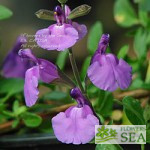
(Elk Grape Ape Jame Sage) Bountiful flowers that are larger than normal for Jame Sage cover Salvia x ‘Elk Grape Ape’ in a cloud of purple that is sort of amethyst to pinot gris in color.
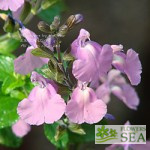
(Elk Smokey Grape Jame Sage) We think the dusky lavender flowers of Salvia x ‘Elk Smokey Grape’ look like the dusty, pale reddish-blue of Malbec grapes. This is a floriferous beauty.
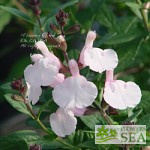
(Elk Pink Cloud Jame Sage II) Abounding with clusters of large, soft pink flowers on spreading branches, Salvia x ‘Elk Pink Cloud II’ looks like a fluffy, cumulonimbus cloud.
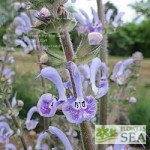
(Shangri-la Sage) Take a close look at Salvia moorcroftiana x indica ‘Shangri-la’ and you’ll notice that its lavender flowers have lighter lower lips with deep purple freckles.
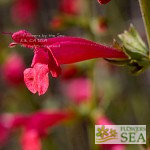
(Crimson Sage) Abundant and long blooming, the bright pink to red tubular flowers of Salvia henryi attract hummingbirds and form a pretty contrast with fuzzy, silvery foliage. This is a long blooming sage that is made for gritty soils, such as sandy loam.
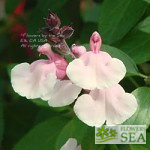
(Elk Crème Anglaise Jame Sage) Framed by minty green foliage, the blossoms of Salvia x ‘Elk Crème Anglaise’ transition from dreamy pale pink throats to white skirts. They look delectable.
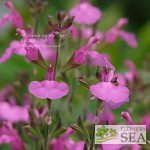
(Elk Xanadu Jame Sage) Like the magical, fictional land of Xanadu, there’s something heavenly about this sage. The flowers of Salvia x ‘Elk Xanadu’ look ethereal due to the bluish cast of their magenta-pink blossoms supported by deep magenta and green calyxes. It's a powerful attraction for pollinators, including hummingbirds.
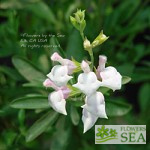
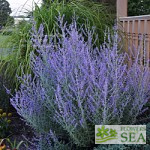
(Rocketman Russian Sage) A cloud of cool, lavender-blue flowers shoot upward from the fine-leafed, gray-green foliage of Salvia yangii ‘Rocketman’. This is a shorter, more upright form of Russian Sage, which was known botanically as Perovskia atriplicifolia until 2019 when the species was reclassified as a Salvia.
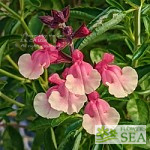
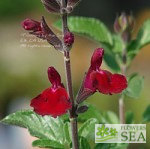
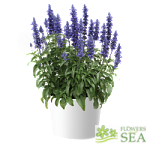
(SALLYFUN™ Blue Lagoon Sage) You can expect early and long bloom from SALLYFUN™ ‘Blue Lagoon', a dwarf border sage with dense, aromatic foliage. Its spikes of deep violet-blue flowers attract bees, butterflies, and hummingbirds.
The following terms were added to your search to help improve the result. Click here to exclude these extra terms from the search.
- na, named, names
Results for name from the blog
| Cultivating Color |
| 1. Pantone Pageant: Designer African Violet Salvias and Companions |
| Purples are cool yet quietly passionate. This includes African Violet 16-3520, a spring 2013 designer color created by the Pantone Corporation. Shades in the blue and purple color range are tranquil and soothing yet commanding, because they calm the garden. Here are a number of choices from our catalog that fashionably match Pantone's African Violet. |
| 2. Plant Safari Salvia in the South African Fynbos -- Part 1 |
| Twenty-six species of Salvia are native to South Africa and of these, 10 grow nowhere else in the world. Salvias play an important role in providing habitat and food for wildlife as well as brightening the semi-arid landscape in the Western Cape province of South Africa. Some are used in cooking or provide material for herbal remedies used in the alternative medicines taken by many South Africans. Flowers by the Sea grows a number of tough yet lovely South African Salvias. |
| Quick Digs |
| 3. Quick Digs: Overwintering Salvias in Containers Outdoors |
| In chilly climates, such as USDA Cold Hardiness Zones with winter temperatures lower than those of Zone 8, it is difficult for potted plants to survive outdoors when the mercury dips. Soil in containers freezes harder and thaws more rapidly than the ground. This third article in our Quick Digs series on preparation for winter in the Salvia garden discusses how to improve chances of survival when overwintering sages in containers outdoors. |
| 4. Quick Digs: Spring Weeds in Salvia Gardens |
| Weeding is the topic of this fourth article in our Quick Digs series about preparing for spring in Salvia gardens. Getting ready for the emergence of previously planted perennials in spring and for planting new sages (Salvia spp.) requires weeding before amending soil and planting. Then, growing vigorously spreading sages and ones rich in aromatic plant chemicals called terpines can help control weeds. |
| 5. Rapid Navigation of the FBTS Everything Salvias Blog |
| To make it easier for you to access articles in our rapidly growing Everything Salvias blog, we have expanded our index of special topics. You'll discover choices including categories for butterfly and hummingbird gardening, how-to videos, shade gardening and xeriscape. |
| Sacred Sages |
| 6. Sacred Sage: Pineapple Sage |
| Many kinds of Sage were considered sacred in ancient times due to their soothing, medicinal qualities. Pineapple Sage (Salvia elegans), which is native to Mexico and Guatemala, is still a highly regarded folk remedy for relieving anxiety, depression and high blood pressure. It is also one of America's most popular culinary sages and is a highlight of the USDA's National Herb Garden. |
| Sage Experts |
| 7. Sage Experts: How Dr. Dufresne Became the Sultan of Salvia |
| December 18, 2018 - With great sadness we have learned that our friend Rich as passed away at his home in Candor, NC. A chance encounter with Pineapple Sage led organic chemist Dr. Richard F. Dufresne to become one of America's leading Salvia researchers. Sage Experts focuses on specialists -- both professionals and amateurs -- who have helped popularize the Salvia genus. Dufresne's life course changed the day he visited Rhode Island's Biodynamic Meadowbrook Herb Farm. Discovering the heady pineapple fragrance of Salvia elegans at Meadowbrook gave him a cause. |
| 8. Sage Experts: How Robin Middleton's Gardens Bloomed |
| Sage Experts focuses on Salvia specialists -- both amateurs and professionals -- in settings ranging from home gardens to university laboratories. This article concerns Robin Middleton of Surrey, England, and his popular Robins Salvias website. The longtime horticulturist grows more than 100 Salvia species and cultivars in his garden and greenhouses. |
| 9. Sage Experts: Meet Huntington Gardens Curator Kathy Musial |
| The Sage Experts series focuses on Salvia specialists — both amateurs and professionals -- in settings ranging from botanic gardens to universities. Kathy Musial, curator of live collections at Southern California's Huntington Gardens, is the subject of this profile. If you imagine a great dinner party involving lots of garden talk, Kathy Musial would be an ideal guest who could share her experiences plant trekking in Australia and Chile or co-managing some 14,000 varieties of plants at Huntington. |
| Salvia Small Talk |
| 10. Salvia Small Talk: The Gardens and Sages of Alcatraz |
| Alcatraz Island in San Francisco Bay once housed prisoners, many of whom helped beautify "The Rock" by working in prison gardens. Nowadays, volunteer gardeners keep the island flowering with the help of long-blooming, drought-tolerant Salvias |
| 11. Salvia Soothes Eye, Heart and Honeybees in Remembrance Gardens |
| In the days following the terrorist destruction of New York’s World Trade Center on September 11, 2001, one article in The New York Times focused on the recovery of 30 acres of gardens of the Battery Park City Parks Conservancy a few blocks south of where the Twin Towers once stood. |
| Salvias Down South |
| 12. Salvias Down South: Texas Butterfly Favorites |
| Wildscaping is a way to landscape to attract pollinators. Butterflies are one of the most important. In Texas there are 463 species. Steering some of this herd of Lepidoptera toward your yard is easier if you know what butterflies frequent your region and which plants they favor for nectar and for laying their eggs, including Salvias. The Texas Parks and Wildlife Department, the Lady Bird Johnson Wildflower Center and Flowers by the Sea all can help Southwestern butterfly gardeners. |
Common terms in this search: elk blue moon iii jame sage dark calyxes cup dusky flowers age lavender rise from theveined mid-green foliage iteration has shinier prettier flower color better branch structure more abundant blossoms than either its two predecessors also exhibits stronger growth know rare event when see one our plant development program love keep improving fbts product part series jamensis hybrids sages called